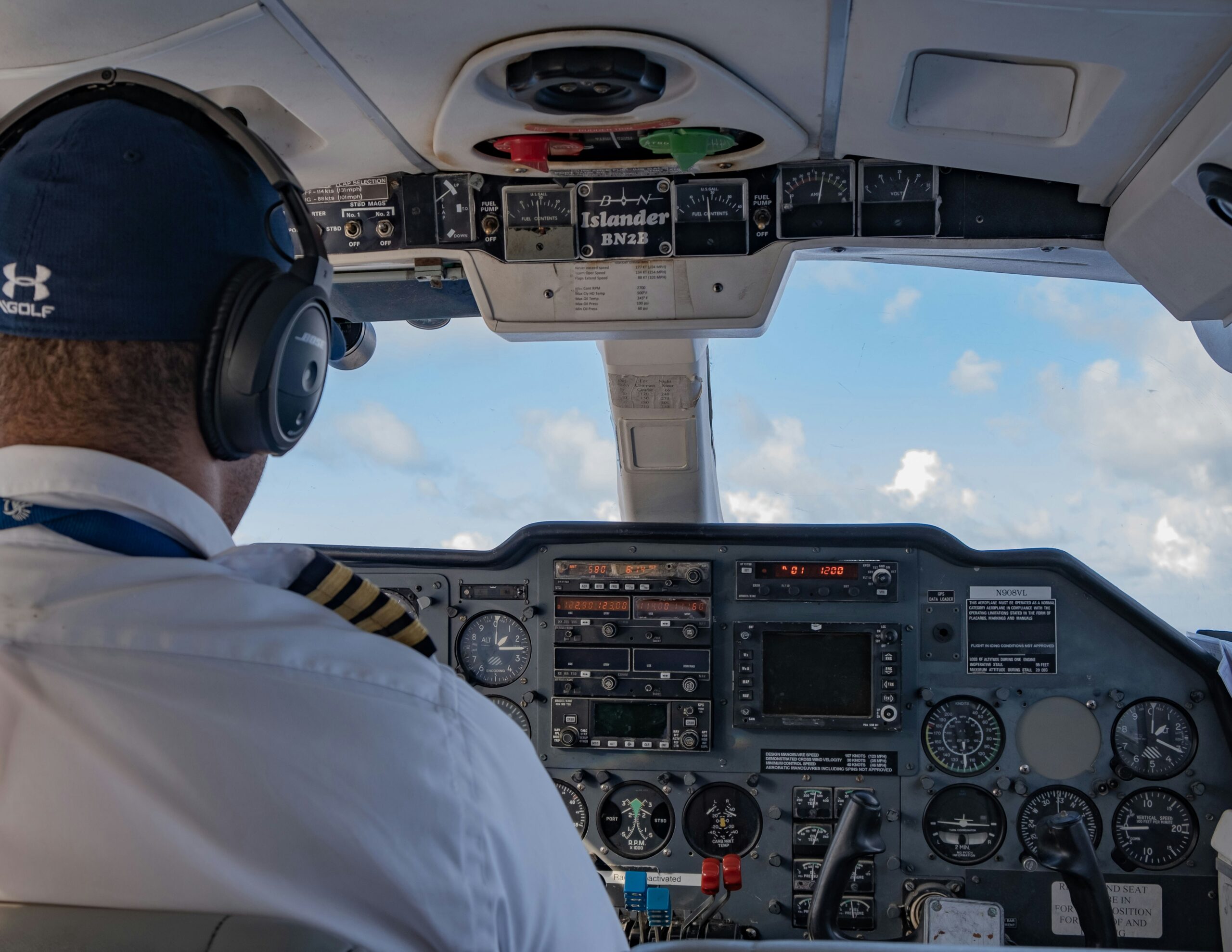
Pilots love clear blue skies and wide open views. However, the weather does not always cooperate. Clouds roll in, fog settles over runways, and storms reduce visibility in minutes. Because of this, smart pilots learn how to fly by instruments, not just by sight. When you master instrument flight, you gain the skills to handle changing conditions with confidence.
Instrument flight gives you control when outside references disappear. Instead of relying on the horizon, you trust your cockpit instruments. As a result, you can fly safely through clouds, rain, and low visibility. This skill set expands your freedom and sharpens your decision-making.
Understanding the basics of instrument flight
Before you can master instrument flight, you need to understand what it involves. Instrument Flight Rules (IFR) allow pilots to operate in low-visibility conditions. Under IFR, you follow strict procedures and communicate closely with air traffic control.
In contrast, Visual Flight Rules rely on what you can see outside. While VFR works well in clear weather, it limits your options. Therefore, many pilots pursue an instrument rating to increase safety and flexibility.
When you train for instrument flight, you learn to read and interpret key cockpit instruments. You focus on attitude, altitude, heading, airspeed, and vertical speed. At first, this may feel overwhelming. However, with practice, the scan becomes natural and smooth.
Building a strong instrument scan
A strong instrument scan forms the core of safe IFR flying. Instead of staring at one gauge, you move your eyes in a steady pattern. This technique helps you catch small changes before they become big problems.
For example, begin with the attitude indicator, then check the heading indicator, then glance at the altimeter. After that, you confirm your airspeed and vertical speed. Because you repeat this pattern often, you stay ahead of the airplane.
At first, many students fixate on one instrument. As a result, they miss subtle shifts in pitch or bank. However, with guided practice, you learn to trust the full panel. Over time, your scan becomes faster and more precise.
Trusting your instruments in low visibility
Flying into clouds can feel unsettling. When you lose the natural horizon, your body may send false signals. This condition, known as spatial disorientation, has caused many accidents. Therefore, trusting your instruments becomes critical.
Your inner ear can trick you during turns or climbs. For instance, you may feel level when you are banking. However, your attitude indicator tells the truth. Because of this, you must believe the instruments over your senses.
Training helps you build this trust. Instructors often use view-limiting devices to block outside vision. As a result, you focus only on the panel. With repetition, you gain confidence and reduce the risk of disorientation.
Mastering instrument approaches
Instrument approaches demand focus and precision. When the weather drops below basic VFR minimums, you rely on published approach procedures to reach the runway safely. These procedures guide you step by step from en route flight to landing.
For example, an ILS approach provides both lateral and vertical guidance. You follow the localizer for alignment and the glide slope for descent. Meanwhile, you monitor altitude and airspeed to stay within limits.
Other approaches, such as RNAV or VOR, require different techniques. Therefore, training exposes you to a variety of scenarios. When you practice each type, you build flexibility and sharpen your skills.
During an approach, small errors can grow quickly. However, if you stay disciplined with your scan and callouts, you catch deviations early. As a result, you maintain control and stability all the way to decision altitude.
Communicating clearly with air traffic control
Under Instrument Flight Rules, communication plays a major role. Air traffic control provides clearances, headings, altitudes, and approach instructions. Therefore, you must listen carefully and respond accurately.
Before each flight, review common IFR phraseology. This preparation reduces stress in the busy airspace. In addition, read back instructions fully to confirm understanding. When you clarify early, you prevent costly mistakes.
Good communication also builds teamwork. Controllers and pilots share the same goal: safe, efficient flight. When you speak clearly and follow instructions promptly, you contribute to smooth operations.
Planning for weather and alternate airports
Weather drives many IFR decisions. Therefore, smart planning begins before the engine starts. Check forecasts, review radar, and study reports along your route. If storms or low ceilings appear likely, consider delays or reroutes.
Under IFR, you often need to file an alternate airport. This rule protects you if conditions fall below landing minimums. Choose alternates with better weather and suitable approaches. As a result, you reduce pressure during arrival.
Fuel planning also matters. Carry enough fuel for your route, approach, missed approach, and alternate. When you plan carefully, you avoid rushed decisions in the air. Preparation builds confidence and protects safety.
Handling emergencies in instrument conditions
Even skilled pilots face unexpected events. Equipment can fail, weather can worsen, and traffic can increase. However, strong instrument skills help you respond calmly.
If you lose a key instrument, rely on backups and partial panel techniques. During training, instructors simulate failures so you learn to adapt. Because of this practice, you stay composed when challenges arise.
In low visibility, you must also prepare for missed approaches. If you reach decision altitude and cannot see the runway, execute the missed approach without hesitation. This procedure keeps you safe and gives you another chance to land.
Staying current and sharp
Earning an instrument rating marks a major achievement. However, skill fades without practice. Therefore, regular training remains essential.
Fly with a safety pilot or instructor to maintain proficiency. Practice holds, approaches, and recovery from unusual attitudes. In addition, review regulations and procedures often. When you stay current, you protect both yourself and your passengers.
Simulators also offer valuable training time. They allow you to rehearse complex scenarios without weather limits. As a result, you strengthen decision-making and cockpit flow.
The confidence that comes with mastery
When you master instrument flight for all conditions, you expand your world. Trips no longer depend solely on clear skies. Instead, you operate with greater flexibility and control.
Moreover, IFR training sharpens overall flying skills. You become more precise with altitude, heading, and airspeed. This precision improves even your visual flying. Therefore, instrument training benefits every part of your aviation journey.
Flying beyond sight requires discipline, trust, and preparation. Yet the rewards make the effort worthwhile. You gain safety, freedom, and a deeper understanding of your aircraft.
If you dream of flying in all seasons and across varied terrain, pursue instrument mastery. Start with solid ground study, commit to consistent practice, and seek guidance from experienced instructors. Step by step, you will build the skills needed to handle clouds, rain, and changing conditions with calm confidence.